
Strength Starts Here: Essential Workouts Every Beginner Should Learn
Strength Starts Here: Essential Workouts Every Beginner Should Learn
Every fitness journey begins with a single step, and for beginners, building strength lays the foundation for long-term progress. Strength is not just about appearance; it is essential for functional movement, injury prevention, improved metabolism, and overall health. The right approach ensures that beginners develop strength safely, effectively, and sustainably. This requires learning fundamental exercises that target major muscle groups, improve coordination, and prepare the body for more advanced training. By focusing on essential workouts from the start, beginners can build confidence, create proper movement patterns, and establish habits that promote consistent improvement over time.
One of the first essential workouts for beginners is the squat. Squats are a compound movement that engages the quadriceps, hamstrings, glutes, and core. They mimic everyday activities like sitting, standing, and lifting, making them highly functional. Beginners can start with bodyweight squats to learn proper form: keeping the chest up, hips back, and knees aligned with the toes. Once mastered, squats can be progressed with resistance bands, dumbbells, or a barbell. Properly executed squats not only build lower body strength but also enhance balance, stability, and flexibility, forming the cornerstone of a beginner’s strength routine.
Push-ups are another foundational exercise every beginner should learn. Push-ups target the chest, shoulders, triceps, and core while also engaging stabilizing muscles. They can be modified for beginners by performing them on the knees, using an elevated surface, or incorporating partial ranges of motion. Learning push-ups develops upper body strength, improves posture, and strengthens the core, all of which are essential for functional fitness. With consistent practice, beginners can gradually progress to full push-ups, increase repetitions, and even explore variations such as incline or decline push-ups to challenge the muscles differently.
Lunges are essential for unilateral strength, meaning they train each leg independently. This helps correct muscle imbalances, improve coordination, and enhance stability. Lunges engage the quadriceps, glutes, hamstrings, and core, while also promoting balance and proprioception. Beginners can start with stationary lunges before progressing to walking lunges, reverse lunges, or weighted variations. Proper form involves keeping the torso upright, ensuring the front knee does not extend past the toes, and engaging the core for stability. Lunges are a versatile exercise that complements squats and provides a well-rounded lower-body strength foundation.
Planks are a core exercise that every beginner should incorporate into their routine. A strong core supports nearly all movements, improves posture, and reduces the risk of injury. Planks engage the deep abdominal muscles, lower back, and shoulders, providing a stable foundation for strength exercises. Beginners can start with short holds, focusing on maintaining a straight line from head to heels and avoiding sagging or arching of the back. Over time, planks can be progressed with side planks, plank reaches, or weighted variations to increase intensity and continue challenging the core.
Rows are essential for developing back strength and counteracting the forward posture often caused by prolonged sitting or computer use. Rows target the upper and middle back, biceps, and rear shoulders, promoting a balanced physique and improving posture. Beginners can start with resistance bands, dumbbells, or a cable machine, focusing on controlled movements and squeezing the shoulder blades together. Strong back muscles support overall strength development, enhance performance in compound lifts, and reduce the risk of injuries, making rows a critical component of a beginner’s routine.
Glute bridges are an effective exercise for activating and strengthening the glutes, hamstrings, and lower back. Strong glutes improve posture, hip stability, and overall lower body power, while also preventing injuries in the lower back and knees. Beginners can start with bodyweight bridges, ensuring they lift the hips fully while engaging the core and glutes. Glute bridges can be progressed by adding resistance bands, dumbbells, or single-leg variations, making them a versatile addition to any strength program.
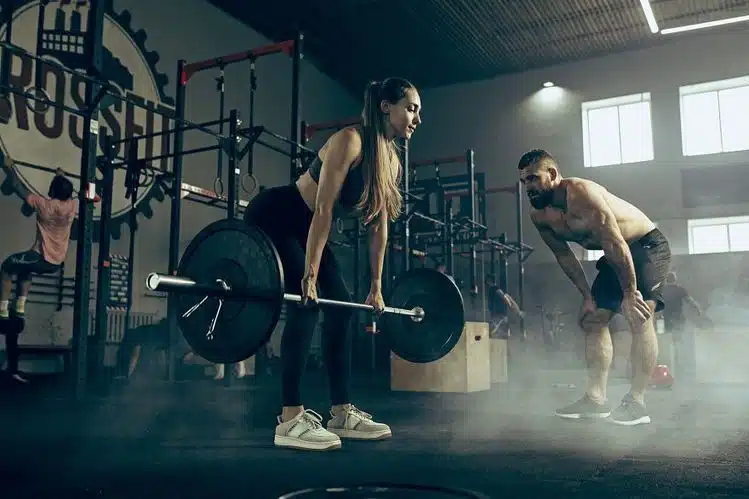
Deadlifts, when taught correctly, are another essential exercise for beginners. Deadlifts engage the posterior chain, including the hamstrings, glutes, lower back, and traps. They teach proper hip hinge mechanics, which are critical for safe lifting in daily life and advanced training. Beginners should start with light weights or even a broomstick to master form, focusing on keeping the spine neutral, hinging at the hips, and engaging the core. Gradually increasing weight and repetitions allows for significant strength gains and improved functional fitness.
Overhead presses are crucial for building shoulder strength and stability. This exercise targets the deltoids, triceps, and upper back while engaging the core to maintain balance. Beginners can start with light dumbbells, resistance bands, or even just a barbell with no weight to practice technique. Proper form involves pressing straight overhead without arching the lower back, keeping the core tight, and moving through a full range of motion. Overhead presses complement push-ups and rows, contributing to balanced upper-body strength development.
Pull-ups or assisted pull-ups are essential for developing upper back and arm strength. While full pull-ups may be challenging for beginners, assisted versions with resistance bands, machines, or negative reps allow gradual progression. Pull-ups engage the lats, biceps, traps, and forearms while improving grip strength and posture. Regular practice, combined with complementary exercises like rows and push-ups, helps beginners build a strong, balanced upper body.
Mobility and flexibility exercises should also be integrated into a beginner’s routine. Dynamic stretches before workouts prepare the joints and muscles for movement, while static stretches after training aid recovery and improve range of motion. Flexibility work enhances performance, prevents injuries, and supports long-term strength development. Incorporating yoga, foam rolling, or targeted mobility drills ensures that the body remains resilient and adaptable as strength increases.
Consistency, progression, and recovery are the pillars of effective strength development. Beginners should start with manageable routines, focusing on form and frequency rather than intensity. Gradually increasing resistance, repetitions, or sets over time ensures continued progress without causing injury or burnout. Adequate recovery, including rest days, sleep, and nutrition, supports muscle repair and growth, making strength gains sustainable. Tracking progress, setting achievable goals, and celebrating small victories further reinforce motivation and adherence.
In conclusion, building strength as a beginner starts with learning essential workouts that target major muscle groups, improve functional fitness, and establish proper movement patterns. Squats, push-ups, lunges, planks, rows, glute bridges, deadlifts, overhead presses, pull-ups, and mobility exercises form the foundation for a safe and effective routine. By focusing on consistency, progressive overload, proper form, and recovery, beginners can develop a balanced, strong, and resilient body. Strength starts here, with these fundamental exercises, creating a lifelong habit of fitness, confidence, and capability.